
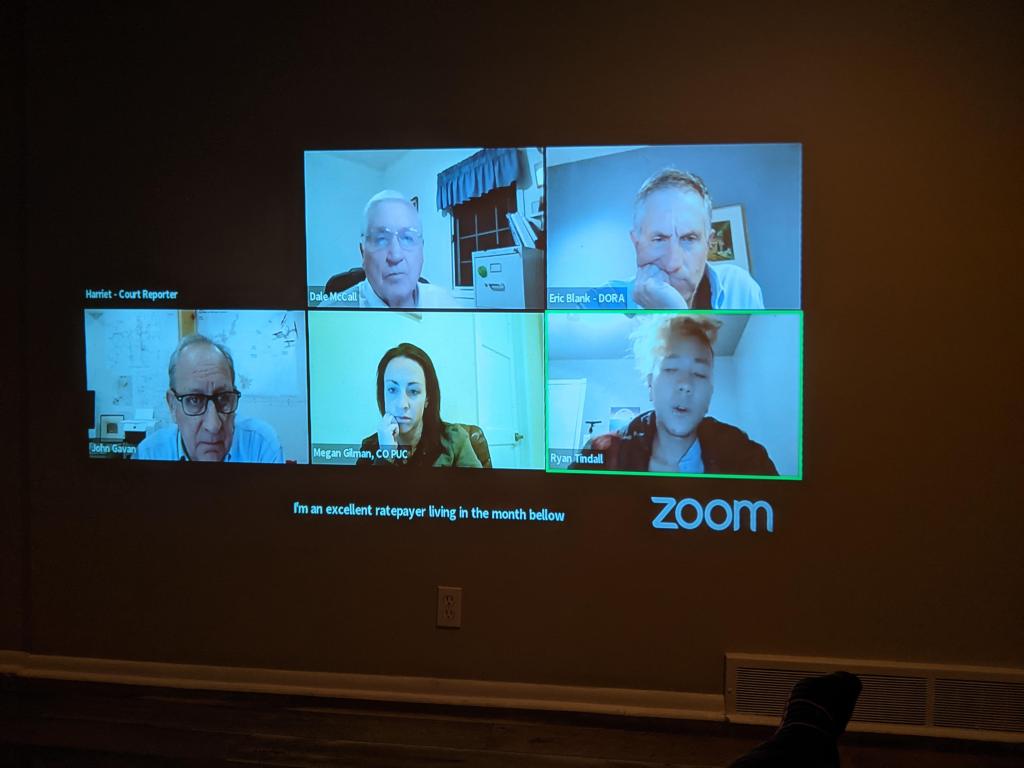
On Dec. 2, more than 100 people registered for a Zoom call hosted by the Public Utility Commission to hear what the public thought of Xcel’s 10-year plan. Scheduled to end at 6 p.m., the event ran well past 7.
Of the dozens and dozens who spoke, only four supported Xcel’s plan. The rest of us called it out for what it is: greenwashing.
Xcel boasts that their “Landmark electric resource plan would cut carbon emissions an estimated 85% by 2030.”
The problem with that target is that it’s too late. The Biden administration’s national goal is 100% carbon-free electricity by 2035; Gov. Polis’ target is 100% renewable energy by 2040. Denver, Boulder, Pueblo, Fort Collins, Longmont, Golden, Summit County, Lafayette, Frisco, Aspen, Glenwood Springs, Nederland, and Breckenridge each have set 100% renewable electricity targets by 2030 or 2035.
We’re already in the midst of a climate crisis. We’re feeling it first-hand with the record-setting heat waves, wildfires, mudslides, droughts and air pollution.
Xcel missed its window of opportunity to help avert climate catastrophe. Now the question is, how bad will we allow it to get?
To stave off the worst of the worst, community members overwhelmingly called for the following changes to Xcel’s plan:
Close all coal plants, especially the Comanche Coal Plant, the state’s dirtiest, most unreliable and expensive source of energy, by 2030 at the latest.
Do not pass on the cost of the Comanche Coal Plant to ratepayers. This coal plant was built in 2010 and it was largely opposed then. It was a bad investment that Xcel Energy needs to take responsibility for. The general public already is paying the price with our health and the challenges of an increasingly hostile climate.
Close the Arapahoe and Cherokee gas plants by 2030. Like the Comanche Coal plant, these have been polluting the air of its nearby mostly Latino, working-class neighborhoods, contributing to our severe ozone issue and of course climate change.
Set a 100% renewable electricity goal by 2040 at the very latest — to align with Colorado targets.
The outpouring of support for these demands has been overwhelming. The hearing on Dec. 2 featured voices ranging from ski industry representatives concerned about shrinking ski days, to local business owners wanting to purchase clean electricity, to indigenous leaders highlighting the devastation coal and gas brings to the land and their communities, to parents angry about the planet on which we’re raising, and eventually will pass along to, our kids.
A strong majority of Pueblo residents (30 opposing Xcel’s plan, 7 neutral and 8 in favor) spoke out at an earlier public hearing in October. More than 1,000 residents have submitted written comments to the same effect.
Xcel Tries Striking a Backdoor “Settlement”
This surge in public participation prompted Xcel to have work behind closed doors with the city of Boulder and Denver and other parties to devise a counter-offer.
Originally the plan was to run the Comanche Coal plant until 2040. In this new deal, that closure date would be moved up to 2035. It would also pass on some of the cost of the bad investment to us ratepayers.
At the Dec. 2 statewide hearing, however, we residents made clear that 2030 is the hard line for closing those coal- and gas-fired plants. We can’t have Xcel making closed-door deals that undermine the strong public consensus on this.
This post was taken largely from EcoSocialist Chair Clayton Dewey’s op-ed in the Colorado Sun, with his permission.
 Denver DSA